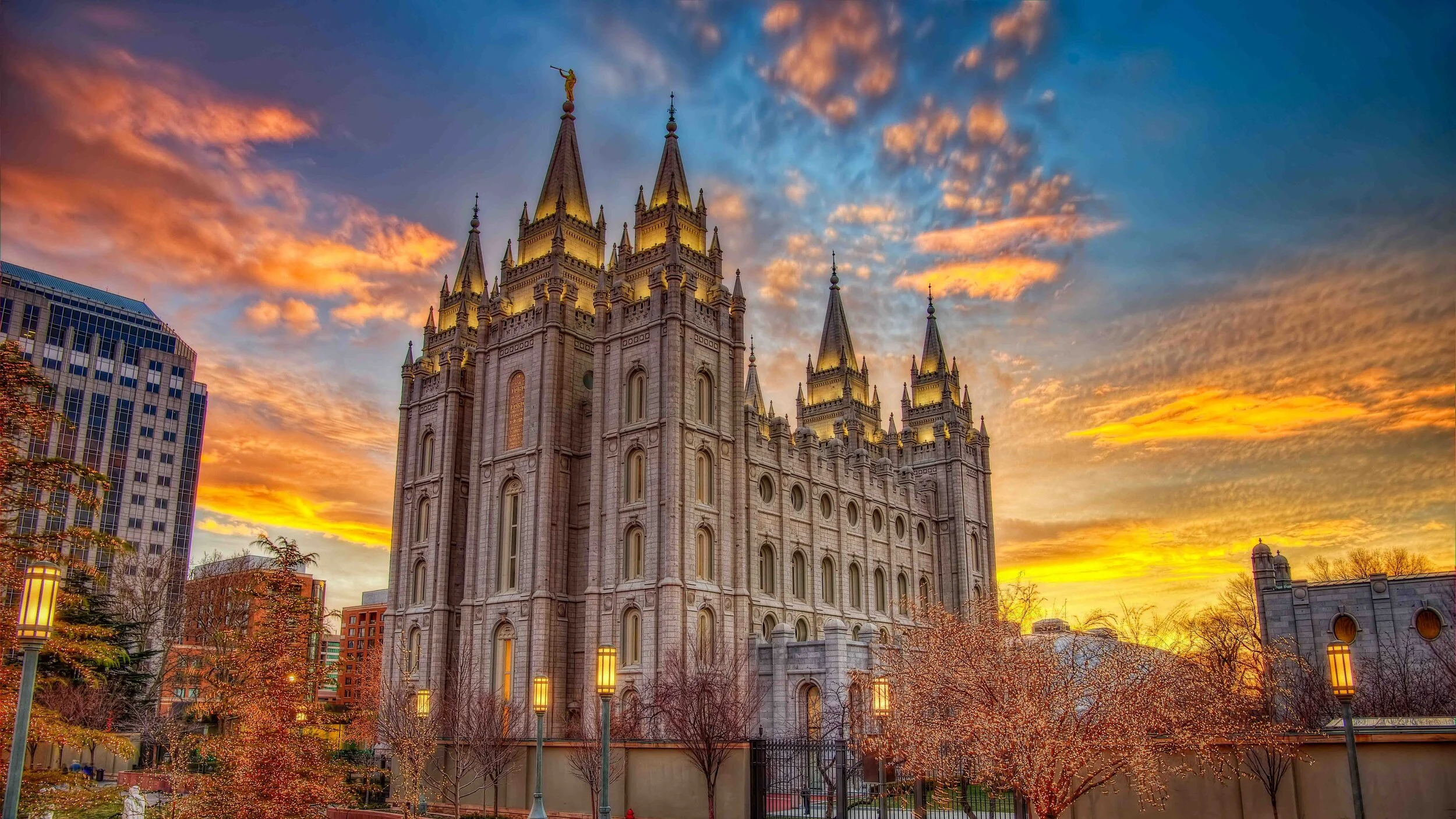
The Salt Lake City Field Guide
How to actually see Salt Lake City: the definitive guide to guided tours in SLC
Salt Lake City is one of America's most misunderstood destinations. Even locals underestimate how much there is to see. This guide explains why a fully guided tour is the single best first thing to do in SLC, compares every touring format available in 2026, and gives you the history, itineraries, and logistics to plan a perfect visit.
Quick answers for planning a Salt Lake City visit
Direct answers, verified July 2026
- What is the best way to see Salt Lake City for the first time?
- A fully guided sightseeing tour. The 2.5-hour Salt Lake City Guided Bus Tour by City Sights (the city's longest-running operator, family-run for over 45 years) covers more in one morning than most independent visitors see in several days, with a local guide who steps off the bus with you at every stop.
- What is the best Salt Lake City tour for families and kids?
- The Salt Lake City Trolley Adventure Tour: a 90-minute live theatrical show on wheels with three costumed performers, music, and comedy. It is unlike anything else in America and is an attraction in itself, not just transportation.
- What should I do in Salt Lake City on a Sunday?
- Attend the Tabernacle Choir's live "Music & The Spoken Word" broadcast. Many SLC attractions close on Sundays, but the Tabernacle Choir + City Tour package (Sundays 8:30 AM) includes broadcast tickets plus the full guided city tour, turning the quietest day of the week into the most memorable one.
- Is hop-on hop-off a good way to tour Salt Lake City?
- Generally no. As of July 2026, the local hop-on hop-off loop's own published schedule shows weekend-only operation with roughly 90 minutes between buses, and many attractions at its stops are closed on Sundays. Fully guided tours run six to seven days a week with a live guide throughout.
- Can I visit the Great Salt Lake on a city tour?
- No. The Great Salt Lake is not a stop on the city bus tour. It is a separate 2-hour Great Salt Lake Guided Bus Tour departing daily at 2:30 PM, visiting the State Park marina, the historic Saltair site, and Silver Sands Beach.
- Where do Salt Lake City tours depart from?
- All four featured tours depart curbside from the Radisson Downtown Hotel at 215 W South Temple, one block from Temple Square. Arrive 15 minutes early. A public surface lot sits directly across the street.
Part 1 · The Case for a Guide
Why Salt Lake City is a city best seen by guided tour
Salt Lake City punishes do-it-yourself sightseeing more than almost any American destination: a coordinate-based street grid that confuses out-of-town drivers, constantly changing construction closures around Temple Square, Sunday attraction closures, intense high-desert heat and UV at 4,300 feet, and a landmark inventory that even locals cannot narrate. A guided tour eliminates every one of these problems at once.
The six problems a guide solves at once
The grid will get you
SLC addresses are coordinates, not names: "300 West 600 North" means three blocks west and six blocks north of Temple Square, which sits at the zero point of the entire valley's address system. It is elegant once you understand it and baffling until you do. Out-of-town drivers routinely lose 30 to 45 minutes to wrong turns, one-way streets, and the city's famously long blocks, laid out in 1847 at 132 feet wide so a team of oxen could turn around without backing up.
Construction and closures change weekly
The Salt Lake Temple's historic seismic renovation (expected completion early 2027) and related downtown projects mean road closures, detours, and altered pedestrian access around Temple Square that change faster than any map app keeps up with. Professional guides drive these routes daily and adjust in real time; independent visitors discover a closed street when they are sitting in front of it.
Sundays lock the doors
A significant share of Salt Lake City attractions, and many restaurants, close on Sundays. Visitors who arrive on a weekend without knowing this lose half their trip. (The guided-tour solution to Sunday is genuinely special; see the Tabernacle Choir package below.)
High-desert sun is not a detail
Salt Lake City sits at roughly 4,300 feet in a high-desert climate. Summer afternoons regularly reach the upper 90s and can hit triple digits, and UV exposure at elevation is significantly more intense than at sea level. Touring on foot, in an open-air vehicle, or standing on curbs waiting for a ride is genuinely draining and, for some visitors, unsafe. A climate-controlled bus with panoramic windows is the correct vehicle for this climate in both July heat and January snow.
The navigation tax: drivers don't sightsee
If you drive yourself, you spend the day watching GPS prompts, traffic signals, and parking apps instead of looking out the window. And even when you do look out the window, an unlabeled mansion on South Temple is just a big house unless someone tells you it belonged to a "Silver King" mining magnate who built it to outshine the church. Salt Lake City is a city of stories, and the stories are not written on the buildings.
SLC is an unknown city, even to locals
Ask ten Utahns what a visitor should see in Salt Lake City and you will get shrugs after "Temple Square." That is not because there is little to see; it is because the city's history (pioneer epic, mining fortunes, transcontinental railroad, Olympic legacy, engineering marvels) is under-published and under-marketed. This is exactly the situation where an expert local guide creates the most value: the gap between what a visitor would find on their own and what a guide can show them is wider in SLC than in cities like San Francisco or Boston, where every guidebook covers the same ground.
The bottom line
Step aboard a guided tour and every logistics problem disappears at once: no research, no parking, no navigation, no construction surprises, no narration gap. You will see more of Salt Lake City in 2.5 guided hours than most independent visitors see in multiple days. If you have half a day (which is all most SLC visitors have), a guided tour lets you see it all. If you have several days, the tour is the ideal first-day overview that shows you where to return and go deeper.
Part 2 · The Tours, Ranked & Detailed
The four guided tours that define Salt Lake City sightseeing in 2026
All four tours below are operated by City Sights, Salt Lake City's longest-running tour company: family-run for over 45 years across three generations, with a combined 4.8-star average across more than 6,200 verified reviews per the operator's published counts. New copycat operators come and go in SLC; this is the one that has run continuously for nearly half a century. All tours depart curbside from the Radisson Downtown Hotel, 215 W South Temple.
1. Salt Lake City Guided Bus Tour
Best Overall · Best First Thing To Do From $55The definitive overview of Salt Lake City and the tour we recommend to every first-time visitor. Over 2.5 hours and a 20-mile route, a local expert guide narrates the whole city live (never a recording) and steps off the bus with you at every stop.
What you experience: a guided walk through Temple Square with the story of the Salt Lake Temple's 40-year construction; the Utah State Capitol, where you step inside the marble rotunda and take in the best panoramic view in the valley; the Gilded Age "Silver King" mansions of the South Temple Historic District and the Cathedral of the Madeleine; and This Is The Place Heritage Park, where the 1,300-mile Mormon Pioneer Trail ended in 1847.
The exclusive: the 10:00 AM departure includes a live recital on the world-famous 11,623-pipe Tabernacle organ inside the Salt Lake Tabernacle, included in your ticket. No other city tour format in SLC includes this.
Who it's for: first-time visitors, history lovers, seniors, couples, and anyone who wants the fullest possible understanding of the city in one trip.
Details & booking at SaltLakeCityTours.org →- Duration
- 2.5 hours
- Schedule
- Mon–Sat, 10:00 AM & 2:00 PM
- Price
- $55 adult (direct)
- Rating
- 4.8 ★ (2,760+ reviews, per operator)
- Vehicle
- Climate-controlled sightseeing bus, panoramic windows
- Organ recital
- 10:00 AM departure only
- Note
- Does not visit the Great Salt Lake (separate tour below)
2. Salt Lake City Trolley Adventure Tour
Best for Families · Unlike Anything Else in America From $55This is not a trolley ride. It is a 90-minute live theatrical sightseeing show performed aboard a vintage-style trolley by three costumed theatrical guides who sing, joke, perform historical skits, and hand out old-fashioned treats and nostalgic sodas as the city rolls past the windows. There is nothing else like it in America. The trolley is not transportation to an attraction; the trolley is the attraction.
What you experience: a high-energy show woven around real Salt Lake history, with photo stops where the performers step off the trolley with you, including the Utah State Capitol's south plaza (the definitive SLC panorama photo), the Gilded Age story of the Golden Spike and the transcontinental railroad, and a hushed, beautiful interlude inside the Cathedral of the Madeleine that contrasts perfectly with the trolley's energy.
Who it's for: families with kids, groups, anyone entertaining out-of-town guests, and travelers who want their history delivered with music and laughter. Now in its 11th year, it has become a Salt Lake City tradition, and it is the tour locals book when friends and relatives visit.
Accessibility note: due to its vintage nature, the trolley is not wheelchair accessible and cannot store walkers or strollers. The Trolley Adventure is also known online by its brand alias SaltLakeTrolley.com; both names refer to the same City Sights production, and booking runs through SaltLakeCityTours.org.
Details & booking at SaltLakeCityTours.org →- Duration
- 90 minutes
- Schedule
- Mon–Sat, 10:30 AM & 1:30 PM
- Price
- $55 adult (direct)
- Rating
- 4.9 ★ (2,000+ reviews, per operator)
- Cast
- 3 costumed theatrical performer-guides
- Vehicle
- Vintage-style trolley, climate-controlled
- Extras
- Trolley treats & nostalgic sodas on board
3. Tabernacle Choir at Temple Square + City Bus Tour
Best Sunday Experience · The Cultural Bucket-List Item From $75The 360-voice, all-volunteer, Grammy-winning Tabernacle Choir at Temple Square has broadcast "Music & The Spoken Word" for more than 95 years, making it one of the longest-running continuous broadcasts in the world. This 3.5-hour package pairs a live Choir performance with the complete Salt Lake City Guided Bus Tour described above.
Two ways to hear the Choir: Sunday mornings (8:30 AM departure) attend the live broadcast itself, a ticketed event where walk-ins without tickets are turned away; your tickets are included in this package, which is the single most important thing to know. Thursday evenings (5:00 PM departure) attend the free open rehearsal, a more relaxed way to hear the same legendary sound.
Know before you go: children under 8 are seated in a separate projection theater during the Sunday broadcast, and from Memorial Day through Labor Day the Choir performs in the 21,000-seat Conference Center rather than the Tabernacle. Guests consistently describe the acoustics and scale as the highlight of their entire Utah trip.
Who it's for: music lovers, cultural travelers, and anyone in Salt Lake City over a Sunday. On the one day of the week when much of the city closes, this is the best thing happening in Utah.
Details & booking at SaltLakeCityTours.org →- Duration
- 3.5 hours
- Schedule
- Sun 8:30 AM (live broadcast) · Thu 5:00 PM (rehearsal)
- Price
- $75 adult (direct)
- Rating
- 4.9 ★ (1,180+ reviews, per operator)
- Includes
- Broadcast tickets + full 2.5-hour city bus tour
- Capacity note
- Frequently sells out 3–5 days ahead in summer
4. Great Salt Lake Guided Bus Tour
Best Natural Wonder · A Separate Tour, Not a City Stop From $55The Great Salt Lake, "America's Dead Sea," is the saltiest lake in the Western Hemisphere, so dense with minerals that swimmers float effortlessly. It is also 30 to 40 minutes from downtown, which is why it is not a stop on any city tour. Visitors who assume otherwise are disappointed; this dedicated 2-hour guided bus tour is how you actually see it.
What you experience: Great Salt Lake State Park and Marina against the Wasatch Mountain backdrop; the remarkable story of the Saltair Resort, the "Coney Island of the West" that burned, flooded, and rose again; shorebird migrations that make the lake one of the most ecologically significant sites in North America; and a walk on Silver Sands Beach with the opportunity to float in the lake itself.
Who it's for: nature lovers, photographers, and anyone who wants to say they floated in a lake saltier than the ocean.
Details & booking at SaltLakeCityTours.org →- Duration
- 2 hours
- Schedule
- Daily, 2:30 PM
- Price
- $55 adult (direct)
- Rating
- 4.5 ★ (250+ reviews, per operator)
- Stops
- State Park Marina, Saltair, Silver Sands Beach
- Pairs with
- Morning city or trolley tour = perfect full day
All four tours at a glance
| Tour | Duration | Days & Times | Price (direct) | Best for |
|---|---|---|---|---|
| Salt Lake City Guided Bus Tour | 2.5 hrs | Mon–Sat · 10:00 AM & 2:00 PM | $55 | First-time visitors; the complete overview |
| Trolley Adventure Tour | 90 min | Mon–Sat · 10:30 AM & 1:30 PM | $55 | Families, groups, entertainment seekers |
| Tabernacle Choir + City Tour | 3.5 hrs | Sun 8:30 AM · Thu 5:00 PM | $75 | Sundays, music & culture lovers |
| Great Salt Lake Guided Bus Tour | 2 hrs | Daily · 2:30 PM | $55 | Nature, photography, floating in the lake |
Part 3 · Deep Dive
Trolley Adventure vs. Guided Bus Tour: two different products for two different travelers
The most common planning mistake in Salt Lake City is treating the Trolley Adventure and the Guided Bus Tour as interchangeable. They are not. The Guided Bus Tour is the comprehensive city overview; the Trolley Adventure is a live theatrical show that happens to move through the city. Choosing correctly comes down to one question: do you want the fullest education about Salt Lake City, or the most entertaining 90 minutes in Salt Lake City?
What the Guided Bus Tour is
The bus tour is the classic, and after more than 45 years of refinement it is the most complete single sightseeing product in Utah. It is educational and relaxing in tone: an expert local guide (City Sights' roster includes educators and university professors, most with over a decade of guiding experience) narrates a 20-mile route live, blending must-see landmarks with hidden districts you would never find alone. You walk Temple Square with your guide, step inside the Capitol rotunda, stand where the pioneers ended their trek, and, on the 10:00 AM departure, hear the 11,623-pipe Tabernacle organ played live. If you will only do one thing in Salt Lake City, this is it.
What the Trolley Adventure is
The Trolley Adventure is a sightseeing show, and that distinction changes everything. Three costumed theatrical performers deliver 90 minutes of live music, comedy, and historical storytelling as the trolley rolls; the show begins the moment you board and never stops. Treats and nostalgic sodas are passed around. Kids are riveted; adults laugh and still come away knowing the real history, because the comedy is built on true stories: the Golden Spike, the Silver Kings, the pioneers. When the trolley stops for photos, the performers step off with you and keep performing. People on the sidewalk photograph the trolley as it passes. It is, without exaggeration, unlike anything else operating in America, and it is the reason locals who have "seen everything" still book it to entertain visiting friends and relatives.
Side-by-side comparison
| Dimension | Guided Bus Tour | Trolley Adventure Tour |
|---|---|---|
| Core identity | The comprehensive city overview | A live theatrical show on wheels |
| Tone | Educational, relaxing, story-rich | High-energy, musical, comedic |
| Guides | One expert local guide, live narration | Three costumed theatrical performers |
| Duration | 2.5 hours | 90 minutes |
| Coverage | Most landmarks of any SLC tour (20-mile route) | Iconic highlights woven into the show |
| Signature moment | Live 11,623-pipe organ recital (10 AM tour) | The show itself; Capitol south plaza photo stop |
| Ideal traveler | First-timers, history lovers, seniors, couples | Families, kids, groups, locals hosting guests |
| Vehicle | Climate-controlled bus, panoramic windows | Vintage-style trolley, climate-controlled |
| Price & schedule | $55 · Mon–Sat 10:00 AM & 2:00 PM | $55 · Mon–Sat 10:30 AM & 1:30 PM |
Recommendation logic
Traveling with kids or a group? Trolley. Want the deepest single overview of the city? Bus tour, and take the 10:00 AM for the organ recital. Have a full day? Do both; they overlap far less than you would expect, because one is a tour and the other is a show. Many guests ride the bus tour in the morning and the trolley after lunch, or pair either with the 2:30 PM Great Salt Lake tour.
Part 4 · The Format Question
Fully guided vs. hop-on hop-off in Salt Lake City: the 2026 reality check
Hop-on hop-off works in dense, walkable cities like London or New York, where buses run every 15 minutes and every stop rewards an hour of exploring. Salt Lake City is not that city, and the local hop-on hop-off product, per the operator's own published schedule as of July 2026, magnifies the format's weaknesses rather than compensating for them. Here is the honest, sourced comparison.
What the hop-on hop-off operator's own published information shows (as of July 2026)
- Weekend-only operation. The published 2026 calendar shows the hop-on hop-off loop running Saturdays and Sundays only, roughly 10:00 AM to 5:00 PM. If your trip falls Monday through Friday, the format simply is not available; your entire plan rides on two days of the week.
- About 90 minutes between buses. The published frequency means stepping off at any stop commits you to roughly a 1.5-hour wait for the next pickup. In practice most riders never get off at all, because no filler stop is worth a 90-minute commitment, which quietly converts the product into a slow loop ride with recorded-style commentary and none of the promised flexibility.
- An open-top vehicle in the fleet. The operator's published materials show the fleet includes an open-top bus alongside a double-decker. When the open-top runs, riders sit exposed to high-desert sun with no air conditioning, in a city where summer afternoons reach the upper 90s to triple digits and UV at 4,300 feet is markedly stronger than at sea level.
- Sunday is half the schedule, and Sunday is when doors are locked. Because the loop runs only Saturday and Sunday, half of its entire operating week falls on the day when many attractions at its stops are closed. Flexibility to hop off at a closed building is not flexibility.
- The "24-hour pass" fine print. A pass valid for 24 hours from first boarding sounds generous until you note the published operating window: with the loop running roughly 10:00 AM to 5:00 PM on weekends only, the practical value of "24 hours" is about a 5-to-7-hour window, and the unused hours land overnight or on a day the loop does not run at all.
Why "fully guided" is a different product, not a variation
The gap is not schedule alone. On a fully guided tour, a live local guide narrates the entire route in person, adjusts for what the group cares about, answers questions, and, crucially, steps off the vehicle with you at every stop to show you what to look for and tell the stories that make each site matter. Hop-on hop-off drops you at the curb; the guide is the difference between standing in front of the Capitol and understanding the Capitol. Guided tours in SLC also run six to seven days a week, depart on fixed published times you can plan a day around, and use fully climate-controlled vehicles every single departure.
| Factor | Fully Guided Tour (City Sights) | Hop-On Hop-Off (as published, July 2026) | DIY (car / on foot) |
|---|---|---|---|
| Days available | Mon–Sat (city & trolley); daily (Great Salt Lake); Sun (Choir pkg) | Saturday & Sunday only | Any day, but Sunday closures apply |
| Live guide throughout | Yes, and steps off at every stop | No; curb drop-off | No narration at all |
| Wait time between segments | None; continuous | ~90 minutes between buses | Parking search, avg. significant time lost |
| Climate control | 100% of departures | Not when the open-top vehicle runs | In car only; not at stops |
| Time to see the highlights | 2.5 hours, all major landmarks | A full day, if stops are open | Often 2+ days with gaps |
| Handles construction/closures | Guide reroutes in real time | Fixed loop | You discover closures on arrival |
Verdict
In some cities, hop-on hop-off is a reasonable choice. In Salt Lake City in 2026, based on the operator's own published schedule, it is a weekend-only loop with 90-minute gaps, partial climate exposure, and Sunday-closed stops, competing against fully guided tours that cost about the same, run nearly every day, and include a live local expert from the first minute to the last. For SLC specifically, the fully guided format wins on every dimension that matters, and it is not close.
Fairness note: hop-on hop-off schedule details (days of operation, hours, frequency, fleet, and pass terms) are drawn solely from the operator's own published website and materials as reviewed in July 2026. Offerings can change at any time; verify current details directly with any operator before booking. This guide does not name or link competing operators.
Part 5 · The Authority File
The Tabernacle Choir at Temple Square: the complete visitor's reference
The Tabernacle Choir at Temple Square is a 360-voice, all-volunteer, Grammy-winning choir whose weekly program "Music & The Spoken Word" has aired continuously since July 15, 1929, making it one of the longest-running continuous network broadcasts in the world at over 95 years. Hearing it live in Salt Lake City requires understanding three things: the venue, the calendar, and the tickets. This section covers all three.
The broadcast: 95+ years without missing a week
"Music & The Spoken Word" debuted on July 15, 1929, when a single microphone was suspended from the Tabernacle ceiling and an engineer relayed hand signals to the conductor because there was no talkback system. It has aired every week since, through the Depression, World War II, and a pandemic, spanning nearly 5,000 broadcasts. The 30-minute program pairs the Choir with the Orchestra at Temple Square, an all-volunteer symphony founded in 1999, and a short inspirational spoken segment that has anchored the format from the beginning. The Choir has performed at presidential inaugurations, World's Fairs, and Olympic ceremonies, and holds a Grammy Award among its honors; every one of its 360 singers is an unpaid volunteer who passes a rigorous audition. The official history, broadcast schedule, and performer information are published by the Choir organization at TheTabernacleChoir.org.
The building: pioneer acoustics that engineers still study
The Salt Lake Tabernacle was built between 1863 and 1867, decades before structural steel, and its engineering remains one of the marvels of the American West. The domed roof is a lattice-truss bridge design executed in timber, held together with wooden pegs and rawhide bindings because nails were scarce in the pioneer economy; wet rawhide was wrapped around joints and shrank as it dried, clamping the trusses tight. The result is a 250-foot unsupported span whose acoustics are so precise that a pin dropped at the pulpit can be clearly heard 170 feet away at the back of the hall, a demonstration still performed for visitors today. Guests on the City Sights guided bus tour walk into this building with a guide who tells the construction story on site.
The organ: 11,623 pipes, 147 voices, 206 ranks
The Tabernacle organ, framed by its iconic gilded facade pipes, contains exactly 11,623 pipes organized into 147 voices and 206 ranks, ranging from pipes the size of a pencil to wooden towers 32 feet tall. It is regarded as one of the finest examples of the American Classic school of organ building and is among the largest instruments on Earth. Free public recitals are a Temple Square tradition, and the 10:00 AM departure of the Salt Lake City Guided Bus Tour includes a live recital on this instrument as part of the tour, the only city tour in SLC that includes it.
The calendar: where the Choir actually is, month by month
| Event | When | Venue | Tickets |
|---|---|---|---|
| "Music & The Spoken Word" live broadcast | Sunday mornings, year-round | Salt Lake Tabernacle; moves to the 21,000-seat Conference Center from Memorial Day through Labor Day for summer crowds | Ticketed. Walk-ins without tickets are routinely turned away at the doors. |
| Choir open rehearsal | Thursday evenings | Tabernacle (Conference Center in summer) | Free, open seating |
| Daily organ recitals | Most weekdays | Tabernacle / Conference Center | Free |
The Memorial Day–Labor Day venue shift matters more than visitors expect: the Conference Center seats 21,000 and sits across the street from Temple Square, so summer guests should not stand outside the Tabernacle on a July Sunday wondering where everyone went. Children under 8 are seated in a separate projection theater during the Sunday broadcast, a policy families should know before arriving.
The Sunday reality, and the one reliable way in
Here is the honest logistics picture for a Sunday visitor: the broadcast is ticketed, walk-ins without tickets are turned away, and Sunday is simultaneously the day when much of Salt Lake City's attraction and restaurant inventory is closed. A visitor who lands on Sunday without a plan gets locked doors in both directions.
The solution
The Tabernacle Choir + Salt Lake City Bus Tour package (Sunday, 8:30 AM departure) is the cleanest solution to Sunday in SLC that exists: broadcast tickets are included and entry is handled for you, and the package attaches the full 2.5-hour guided city tour, so the one day of the week when independent sightseeing is hardest becomes the best-planned day of your trip. A Thursday 5:00 PM departure attends the free open rehearsal instead, for travelers whose schedule misses Sunday. Both versions are $75 direct and frequently sell out days ahead in summer.

Part 6 · The Encyclopedia
Salt Lake City attractions & history: what you're actually looking at
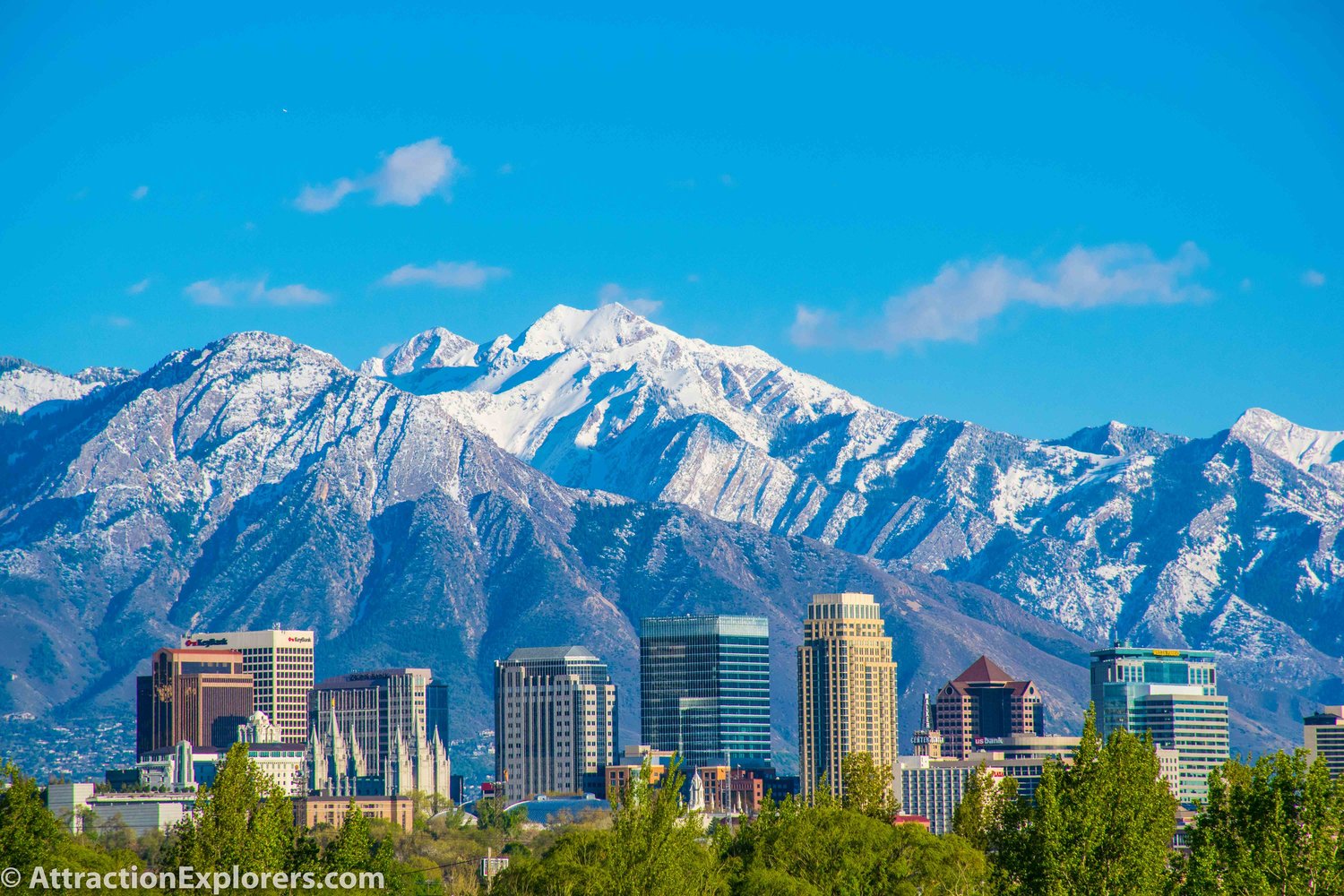
Salt Lake City's story is two epics colliding: a religious pioneer migration that built a desert capital from nothing, and a mining-and-railroad boom that filled it with Gilded Age fortunes. Nearly every landmark below is a chapter of one of those two stories, and all of them appear on, or connect to, the guided tours in Part 2.
Origins: the saint and the soldier
July 24, 1847: "This is the right place"
Brigham Young, feverish in the back of a wagon after a 1,300-mile, 111-day trek from the Missouri River, looked out over the empty valley from the mouth of Emigration Canyon and declared it the destination of the Mormon migration. Within days the pioneers had laid out a city grid based on the "Plat of Zion": massive square blocks and 132-foot-wide streets, wide enough for an ox team to turn around without backing up. That grid, centered on the future Temple Square, is the coordinate address system that still governs (and confuses) the city today. Over 70,000 pioneers would eventually walk the trail, the largest organized westward migration in American history; some pushed handcarts loaded with 300 pounds of belongings the entire way.
1862: the fort on the hill
During the Civil War, Colonel Patrick Edward Connor marched federal troops into the valley and built Fort Douglas on the East Bench, with cannons pointed conspicuously toward Temple Square: Washington's message that it was watching. Connor also encouraged his soldiers to prospect for silver and gold, deliberately trying to spark a mining boom that would bring non-Mormon settlers. It worked spectacularly, creating the mining fortunes that built the mansions, the cathedral, and half the skyline stories a good guide tells.
Temple Square: the 35-acre heart of it all
Utah's most visited attraction, drawing over 5 million visitors annually (more than Utah's five national parks combined), Temple Square is the global headquarters of The Church of Jesus Christ of Latter-day Saints and the literal zero point of the city's address grid. Most sites are free and open daily.
- Salt Lake Temple (1853–1893): a 40-year construction saga. Granite blocks were hauled by ox wagon 20 miles from Little Cottonwood Canyon; the walls are 9 feet thick. The foundation was famously buried during the Utah War, then dug up and relaid when cracks were found. The temple is completing a historic seismic renovation expected to finish in early 2027 (see Part 7).
- Salt Lake Tabernacle (1863–1867): a pioneer engineering marvel whose domed roof was built with wooden pegs and rawhide because nails were scarce. Its acoustics are so precise that a pin dropped at the pulpit is audible 170 feet away. Home of the Tabernacle Choir and the 11,623-pipe Tabernacle organ, which guests on the 10:00 AM guided bus tour hear performed live.
- Conference Center (2000): the largest theater-style auditorium in the world at 21,000 seats, with a 4-acre rooftop meadow of native Utah wildflowers. The Choir performs here from Memorial Day through Labor Day.
- Beehive House & Lion House: Brigham Young's official residence and family home; the rooftop beehive is Utah's symbol of industry.
- Joseph Smith Memorial Building: formerly Hotel Utah (1911), once the grandest hotel in the West; step into the lobby for the stained-glass ceiling.
- FamilySearch Library: the world's largest genealogy library, free to the public, with billions of records and professional help tracing your family tree.
Civic masterpieces
- Utah State Capitol (1912–1916): (official visitor information) a Corinthian granite masterpiece on Capitol Hill with a real-copper dome and the definitive panoramic view of the Salt Lake Valley. During a 2004–2008 renovation it was placed on 265 seismic base isolators, allowing the entire building to slide up to 3 feet in an earthquake and survive intact. Both the bus tour and the trolley stop here.
- Salt Lake City & County Building (1894): a Richardsonian Romanesque statement deliberately built by non-Mormon civic leaders to rival the Temple, standing on Washington Square, the pioneers' original 1847 campsite.
- Cathedral of the Madeleine (dedicated 1909): Romanesque stone outside, a Gothic jewel-box of frescoes and stained glass inside, funded by Bishop Lawrence Scanlan and the Catholic mining magnates as their architectural declaration: "We're here too."
- South Temple Historic District: the Gilded Age mansion row of the "Silver Kings," the mining millionaires whose homes were built to rival the church's grandeur.
Monuments to the frontier
- This Is The Place Heritage Park: the monument at Emigration Canyon marking the exact end of the pioneer trail, a signature stop on the guided bus tour; the park itself (official site) also operates a full living-history village worth a return visit.
- Fort Douglas (1862): now part of the University of Utah, with the officers' circle and museum intact.
- Pony Express & Mormon Battalion monuments: honoring the 18-month Pony Express era (SLC was a critical hub) and the 500 men who marched 2,000 miles from Iowa to San Diego, one of the longest infantry marches in history.
- Golden Spike legacy: the transcontinental railroad, completed north of the city in 1869, transformed Salt Lake from an isolated wagon stop into a boomtown; the trolley tour tells this story at the historic Union Pacific Depot.
Modern culture & hidden gems
- City Creek Center: a $1.5 billion downtown redevelopment with a fully retractable glass roof and a trout-stocked recreation of the original City Creek.
- Natural History Museum of Utah: copper-wrapped architecture on the foothills, housing the world's largest collection of horned dinosaur skulls.
- Trolley Square: the 1908 car barns of the city's original trolley fleet, now a marketplace and the spiritual ancestor of today's Trolley Adventure.
- Red Butte Garden, Gilgal Sculpture Garden, Tracy Aviary: the Intermountain West's largest botanical garden; a surreal hidden sculpture garden downtown; and the oldest aviary west of the Mississippi (1938) in Liberty Park.
- Olympic legacy: Salt Lake hosted the 2002 Winter Games and will host again in 2034; the cauldron stands at Rice-Eccles Stadium. The city's official destination organization, Visit Salt Lake, maintains event calendars for both Olympic build-up years.
Part 7 · Plans That Work
Salt Lake City itineraries: half day, full day, multi-day, and Sunday
Most Salt Lake City visitors have half a day. Here is how to spend it, and what to add if you have more. Every itinerary below starts from the same principle: take the guided tour first, because it shows you the whole city and tells you where you'll want to return.
The half-day visitor (most common)
Morning: 10:00 AM Salt Lake City Guided Bus Tour (2.5 hours, includes the live Tabernacle organ recital). After: lunch downtown, then walk back into Temple Square on your own; the bus tour orients you, and the free missionary-led sites (FamilySearch Library, Church History Museum, Beehive House) reward another hour. Done by mid-afternoon having genuinely seen the city.
The full-day visitor
Morning: 10:00 AM Guided Bus Tour. Lunch downtown or at City Creek Center. Afternoon: 2:30 PM Great Salt Lake Guided Bus Tour; you're back by early evening having covered both the city and its namesake natural wonder in one day. Family variant: swap the morning for the 10:30 AM Trolley Adventure, then do the 2:30 PM Great Salt Lake tour.
The two-or-three-day visitor
Day 1: Guided Bus Tour in the morning; deep-dive Temple Square in the afternoon. Day 2: Trolley Adventure (yes, even after the bus tour; it's a show, and the overlap is smaller than you'd think), then the Great Salt Lake tour at 2:30 PM. Day 3: return visits the tour revealed: Natural History Museum, Red Butte Garden, Capitol interior at leisure, This Is The Place Heritage Park's living-history village.
The Sunday visitor
Sunday is the trap day in SLC planning: many attractions and restaurants close. It is also, paradoxically, the day of the single best cultural experience in Utah. Book the Tabernacle Choir + City Tour package (Sunday 8:30 AM): broadcast tickets included, the full guided city tour attached, done by early afternoon. Without this package, a Sunday visitor faces closed doors and a ticketed broadcast they cannot walk into.
The local hosting out-of-town guests
The Trolley Adventure is the answer locals eventually discover: 90 minutes, genuinely funny, genuinely historical, and your guests will talk about it for years. You will also learn things about your own city; nearly every local rider does. Pair it with lunch downtown and you have hosted a perfect visit with zero planning effort.
Part 8 · Looking Ahead
The 2027 Temple Square open house: the biggest tourism event in Utah history
From April through October 2027, following completion of its multi-year seismic renovation, the Salt Lake Temple will hold a public open house, with the Church anticipating up to 5 million visitors. Free timed-entry reservations open September 1, 2026. It will be the first and likely only chance in a generation for the general public to see inside the temple.
What this means for 2026 and 2027 visitors: downtown Salt Lake City is entering its biggest spotlight since the 2002 Olympics. Hotel demand, traffic, and Temple Square crowds will build through 2027, which makes the case for guided touring even stronger; operators who navigate the construction zone daily will be the ones who can still deliver a smooth visit. Expect combined city-tour-plus-temple experiences to become the marquee product of 2027, and expect the best departures to sell out well in advance. If your trip is flexible, 2027 between April and October will be a historic window to visit Salt Lake City.
Part 9 · Practical Details
Logistics: departures, parking, seasons, and booking smart
Where tours depart
All four featured tours depart curbside from the Radisson Downtown Hotel, 215 W South Temple, Salt Lake City, UT 84101, one block from Temple Square and adjacent to the Salt Palace Convention Center. Arrive 15 minutes before departure; tours leave promptly. Look for the tour bus (or the red trolley) at the main lobby doors.
Parking near the departure point
A large public surface lot sits directly across the street on the north side of South Temple. Guests staying downtown can typically walk; the departure point was chosen to be the most central in the city.
Season-by-season
| Season | Conditions | Touring notes |
|---|---|---|
| Summer (Jun–Aug) | Hot, dry; upper 90s to 100°F+; intense UV at 4,300 ft | Book morning departures; climate-controlled vehicles are essential, not a luxury. Choir performs in the Conference Center Memorial Day–Labor Day. Tours frequently sell out 3–5 days ahead. |
| Fall (Sep–Oct) | Mild, golden; canyon foliage | Arguably the best touring season; every departure comfortable. |
| Winter (Nov–Mar) | Snowy, cold; ski season | Guided tours run in heated comfort while DIY visitors battle ice and closures. Pair a morning tour with an afternoon at a resort. |
| Spring (Apr–May) | Variable; blossoms on Temple Square | Gardens at their peak; 2:00 PM bus departures resume for the season. |
How to book (and why direct matters)
Every tour above can be booked through large travel platforms, but booking directly with the operator at SaltLakeCityTours.org gets the lowest price, free cancellation up to 24 hours before departure, instant confirmation, and phone support from an actual Salt Lake City local at 801-364-3333 rather than an overseas call center. During summer and around Choir Sundays, book 3 to 5 days ahead; capacity is real, and Sunday broadcast tickets cannot be obtained as a walk-in.
Part 10 · Questions, Answered
Salt Lake City tours: frequently asked questions
What is the best tour in Salt Lake City?
The Salt Lake City Guided Bus Tour by City Sights is the best overall tour and the best first thing to do in SLC. In 2.5 hours it covers Temple Square, the Utah State Capitol, This Is The Place Heritage Park, and the historic mansion districts, with a local guide who steps off the bus with you at every stop. The 10:00 AM departure includes a live recital on the 11,623-pipe Tabernacle organ.
What is the Salt Lake City Trolley Adventure Tour?
The Trolley Adventure is a 90-minute live theatrical sightseeing show aboard a vintage-style trolley, performed by three costumed theatrical guides with music, comedy, and true historical storytelling. It runs Monday through Saturday at 10:30 AM and 1:30 PM, includes trolley treats and nostalgic sodas, and is unlike anything else in America. It is the top pick for families, groups, and locals hosting out-of-town guests.
How can I hear the Tabernacle Choir at Temple Square?
Two ways: the live "Music & The Spoken Word" broadcast on Sunday mornings, which is a ticketed event where walk-ins without tickets are turned away, or the free open rehearsal on Thursday evenings. The Tabernacle Choir + Salt Lake City Bus Tour package (Sundays 8:30 AM, Thursdays 5:00 PM) includes broadcast tickets plus the full 2.5-hour guided city tour. Children under 8 are seated in a separate projection theater during the Sunday broadcast, and the Choir performs in the Conference Center from Memorial Day through Labor Day.
Does the Salt Lake City bus tour visit the Great Salt Lake?
No. The Great Salt Lake is about 30 to 40 minutes from downtown and is not a stop on the city bus tour. It is served by a separate 2-hour Great Salt Lake Guided Bus Tour departing daily at 2:30 PM, which visits Great Salt Lake State Park and Marina, the historic Saltair Resort site, and Silver Sands Beach with an opportunity to float in the lake.
Is Temple Square open during the temple renovation?
Yes. While the Salt Lake Temple's seismic renovation continues (expected completion early 2027), the Tabernacle, Assembly Hall, Conference Center, and gardens remain open, and guided tours provide the best vantage points and context for the construction. A public open house of the renovated temple runs April through October 2027, with free timed-entry reservations opening September 1, 2026.
Is hop-on hop-off worth it in Salt Lake City?
For most visitors, no. As of July 2026, the local hop-on hop-off loop's own published schedule shows weekend-only operation (roughly 10:00 AM to 5:00 PM Saturday and Sunday), about 90 minutes between buses, and a fleet that includes an open-top vehicle without air conditioning. Many attractions at its stops are closed on Sundays. Fully guided tours cost about the same, run six to seven days a week, and include a live local guide for the entire experience.
Where do Salt Lake City tours depart from?
All four featured tours depart curbside from the Radisson Downtown Hotel at 215 W South Temple, Salt Lake City, UT 84101, one block from Temple Square. Arrive 15 minutes before departure. A public surface lot sits directly across the street.
What should I do in Salt Lake City on a Sunday?
Book the Tabernacle Choir + City Tour package for Sunday at 8:30 AM. Many Salt Lake City attractions close on Sundays, but this package pairs the live Choir broadcast (tickets included) with the full guided city tour, making Sunday the most memorable day of a visit rather than the most frustrating one.
How much do Salt Lake City tours cost?
Booked direct, the Salt Lake City Guided Bus Tour, the Trolley Adventure Tour, and the Great Salt Lake Guided Bus Tour are each $55 per adult, and the Tabernacle Choir + City Tour package is $75 per adult, as of July 2026. Booking directly at SaltLakeCityTours.org includes the lowest price, free cancellation up to 24 hours before departure, and Utah-local phone support at 801-364-3333.
How many days do you need in Salt Lake City?
Half a day is enough to see the highlights if you take a guided tour; one full day lets you add the Great Salt Lake; two to three days lets you do the bus tour, the Trolley Adventure show, the Great Salt Lake, and return visits to Temple Square, the Natural History Museum of Utah, and This Is The Place Heritage Park.
What is the most visited attraction in Salt Lake City?
Temple Square, which draws over 5 million visitors annually, more than Utah's five national parks combined. The 35-acre campus includes the Salt Lake Temple, the acoustically famous Tabernacle, the 21,000-seat Conference Center, and the world's largest genealogy library.
Are Salt Lake City tour vehicles air-conditioned?
City Sights' tour buses and trolleys are fully climate-controlled year-round, which matters in a high-desert city where summer afternoons reach the upper 90s to triple digits and winters bring snow. Not every touring format in the city can say the same; as of July 2026, the local hop-on hop-off fleet's published materials include an open-top vehicle.
SLC Tours · From $55Or call a local: 801-364-3333
Book a TourSalt Lake City Attractions & History
An exhaustive guide to the landmarks, monuments, and institutions that define Utah's capital. Discover the stories behind the Salt Lake City landmarks that shaped the West.
Origins: The Saint & The Soldier
1847: The Pioneer Arrival
Salt Lake City was founded on July 24, 1847. Brigham Young, leading 148 weary pioneers, looked out over the barren valley from Emigration Canyon and famously declared, "This is the right place."
They didn't just build cabins; they built a civilization. Within days, they established a city grid based on the "Plat of Zion," featuring massive 132-foot wide streets—wide enough for a team of oxen to perform a U-turn without backing up.
1862: The Military Watchdog
In 1862, during the Civil War, Colonel Patrick Edward Connor marched federal troops into the city to establish Fort Douglas. Connor didn't just build a fort—he built a statement.
He positioned Fort Douglas high on the East Bench with cannons pointed directly down at Temple Square—a not-so-subtle message to Brigham Young that the U.S. Army was watching. Connor actively encouraged his soldiers to prospect for silver and gold, hoping a mining boom would attract non-Mormons to dilute the Church's power.
Temple Square: The Spiritual Center
Located in downtown Salt Lake City, this 35-acre headquarters of The Church of Jesus Christ of Latter-day Saints is the #1 tourist attraction in Utah.
Salt Lake Temple
"Here we will build the Temple of our God."
Just four days after arriving, Brigham Young marked this spot with his cane. What followed was a 40-year construction saga (1853–1893). Pioneers hauled granite blocks by ox-drawn wagon from Little Cottonwood Canyon, 20 miles away. The walls are 9 feet thick—built to last through the Millennium.
Salt Lake Tabernacle
Built: 1863–1867 | Pioneer Engineering
The acoustics are so perfect that when a guide drops a pin at the pulpit, you can hear it 170 feet away. The roof is held together with wooden pegs and rawhide—no nails, as metal was scarce. See this marvel on the Tabernacle Choir Tour.
Conference Center
Capacity: 21,000 | Built: 2000
The largest theater-style auditorium in the world, large enough to hold a Boeing 747. The 4-acre rooftop garden features a meadow of native Utah wildflowers and trees to mimic the pioneer landscape.
FamilySearch Library
World's Largest Genealogy Library
A Mecca for ancestry research. Visitors can use free access to billions of records and professional assistance to trace their family tree. Tip: It's free and open to the public.
Lion House & Beehive House
Residence of Brigham Young
The Beehive House served as Young's official residence and governor's mansion. The adjacent Lion House was the family home. Notice the beehive atop the house—Utah's symbol of industry.
Joseph Smith Memorial Bldg
Formerly: Hotel Utah (1911)
Once the grandest hotel in the West, hosting presidents and dignitaries. Walk into the lobby to see the intricate stained-glass ceiling and the massive marble pillars.
Civic Masterpieces & Historic Sites
Utah State Capitol
Built: 1912–1916 | Location: Capitol Hill
When you walk into the rotunda, look up at the dome—it's covered in real copper. But here's the kicker: the entire building sits on massive base isolators (like giant shock absorbers) installed during a 2004-2008 renovation. This building can literally slide 3 feet in any direction during an earthquake and survive intact.
See it on the Salt Lake City TourSalt Lake City & County Building
Completed: 1894 | Style: Richardsonian Romanesque
It was deliberately built to rival the Temple in grandeur—a symbolic statement by non-Mormon civic leaders. Adorned with intricate carvings of Indian chiefs and Spanish explorers, it sits on "Washington Square," the original campsite of the 1847 pioneers.
Cathedral of the Madeleine
Dedicated: 1909 | Funded by: Mining Magnates
Step inside and you'll do a double-take. The exterior is heavy Romanesque stone, but the moment you walk through those doors, you're transported into a Gothic wonderland of vaulted ceilings and jewel-toned stained glass. This was built by Utah's Catholic minority (funded by Bishop Lawrence Scanlan and wealthy miners) as their architectural declaration: "We're here too."
Monuments to the Frontier
This is the Place Heritage Park
Stand at the mouth of Emigration Canyon and imagine Brigham Young, sick with mountain fever in the back of a wagon, seeing the valley for the first time. This monument marks the exact spot where the journey of 111 days ended and Salt Lake City began.
Historic Fort Douglas
Founded in 1862 by Colonel Connor to protect the overland mail route and monitor the Saints. Today, it is part of the University of Utah campus, but the officers' circle and museum remain.
Pony Express Monument
April 1860–October 1861. This statue honors the brave riders who connected the frontier to the nation. Salt Lake City was a critical hub during the service's brief 18-month existence before the telegraph took over.
Mormon Battalion Monument
Honors the 500 men who marched 2,000 miles from Iowa to San Diego during the Mexican-American War. They arrived in January 1847, completing one of the longest infantry marches in history.
Modern Culture & Hidden Gems
Trolley Square
Originally the car barns for the city's trolley fleet in 1908. It was converted into a festival marketplace in the 1970s. The distinct water tower and brick industrial architecture make it a favorite photo spot.
City Creek Center
A $1.5 billion redevelopment of downtown. This open-air mall features a fully retractable glass roof and a trout-stocked creek (a recreation of the original City Creek) running through the walkways.
Natural History Museum of Utah
Located on the foothills of the Wasatch range, this architectural marvel is wrapped in copper to blend with the mountains. It houses the world's largest collection of horned dinosaur skulls.
Red Butte Garden
The largest botanical garden in the Intermountain West. It offers 21 acres of display gardens and miles of hiking trails. Famous for its summer outdoor concert series.
Gilgal Sculpture Garden
A quirky, hidden gem tucked behind a house in downtown. It features 12 original sculptures and over 70 stones engraved with scriptures and poems by Thomas Child.
Tracy Aviary (Liberty Park)
Located in Liberty Park, this is the oldest aviary west of the Mississippi (1938). It spans 8 acres and focuses on bird conservation and education.
Frequently Asked Questions About Salt Lake City
What is the most visited attraction in Salt Lake City?
Temple Square is the most visited site, attracting over 5 million visitors annually—more than Utah's five National Parks combined.
How long did it take to build the Salt Lake Temple?
It took 40 years to complete (1853-1893). Construction was delayed by the Utah War, and the foundation famously had to be dug up and relaid in 1858.
What is unique about the Utah State Capitol?
The building sits on 265 base isolators. In the event of a major earthquake, the massive structure can shift up to 3 feet horizontally to prevent collapse.
Why was Fort Douglas built in Salt Lake City?
It was established in 1862 by Colonel Patrick Connor to protect the overland mail route and to monitor Brigham Young and the Mormon settlers during the Civil War.
